
In 2024, I watched John Oliver take a scathing takedown of food delivery services and the pain their workers suffer because they have no other choice. Nearing “mustache-twirling cartoon villain” levels of villainy, there’s one standout story highlighted in the “Last Week Tonight” segment. We are shown the horrific story of Kevin Ross: a delivery driver who broke his foot after being hit by a car while at work. Ross simply has no other choice but to force through suffering to make ends meet. The CNBC News camera pans on the cast as they bike through the streets of Washington, D.C. It’s terrifying. This is the fuel of late-stage capitalism’s nightmare, and it happens every day.
The gig economy is a brutal and unforgiving economy. A model in which people are often forced to endure pain where necessity demands that something or someone be spared. The center of taking pain in order to give it is where you’ll find Lloyd Li Choi’s “Lucky Lu.” At its core, this is the same haunting story of despair under capitalism, and Choi’s version of it is tender, poignant, and fascinating nonetheless.
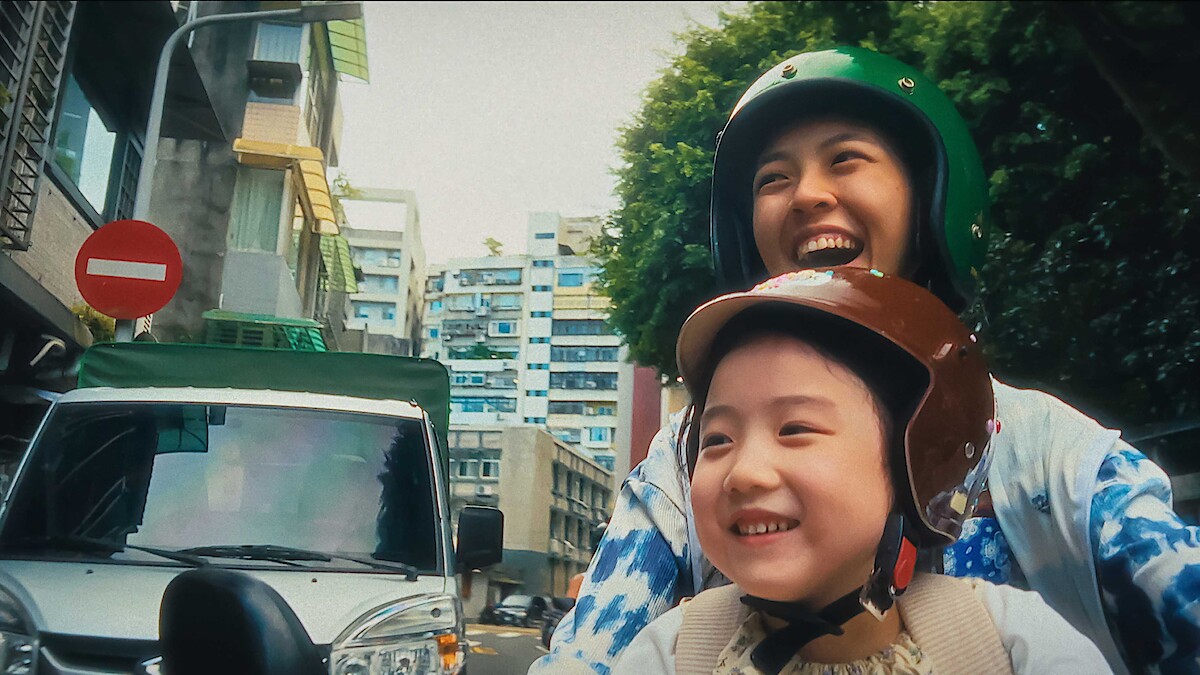
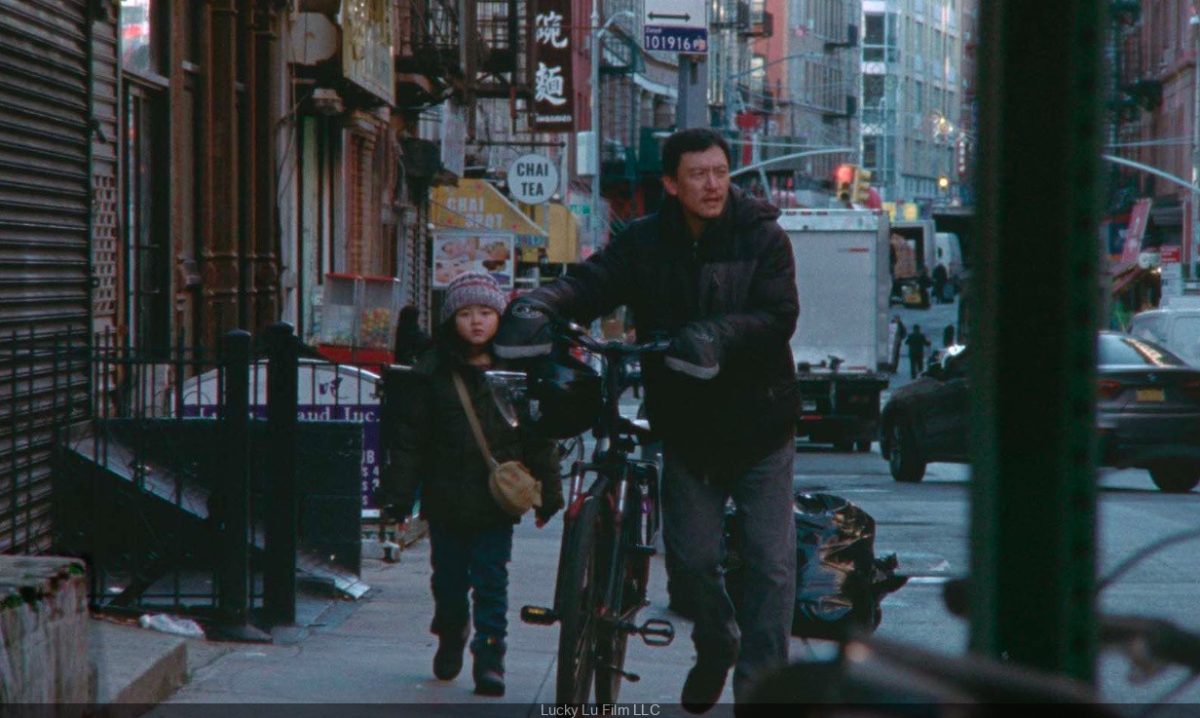
Based on Choi’s 2022 short film (titled “Same Old”), Lu JiaCheng (Change Chen) is a Chinese immigrant who faces the prospect of total financial ruin when his e-bike is stolen while at work. No bike? No job. Mmm..no job? No money. No money? The rent owed on his new apartment becomes a race against time to find it. To make matters worse, his wife Si Yu (Fala Chen) and daughter Yaya (Karabel Mana Wei) arrive from China. To say the least, Lou doesn’t feel lucky.
Don’t take it in a roundabout way: This isn’t a comedic or edgy riot about the underbelly of New York City a la “After Hours” or “Uncut Gems.” The focus here is not on presenting confrontation for the sake of excitement. Instead, the film bleeds a real, vivid sadness into both the location and the situation. Speaking in an interview with Naiguan Film, Choi discussed his desire to create a realistic description of the city, “…what is New York really like?”, while using a lot of green and blue colors as the film’s primary color palette. The result was powerful, establishing Lou in a world in which millions of people find themselves every day. The show was also amplified by a beautiful musical score conducted by Charles Humnery, who describes himself on his website as “minimalist chic”, which I think captures the essence perfectly.
Read also: How “There Will Be Blood” and “Requiem for a Dream” explore the corrupt American dream
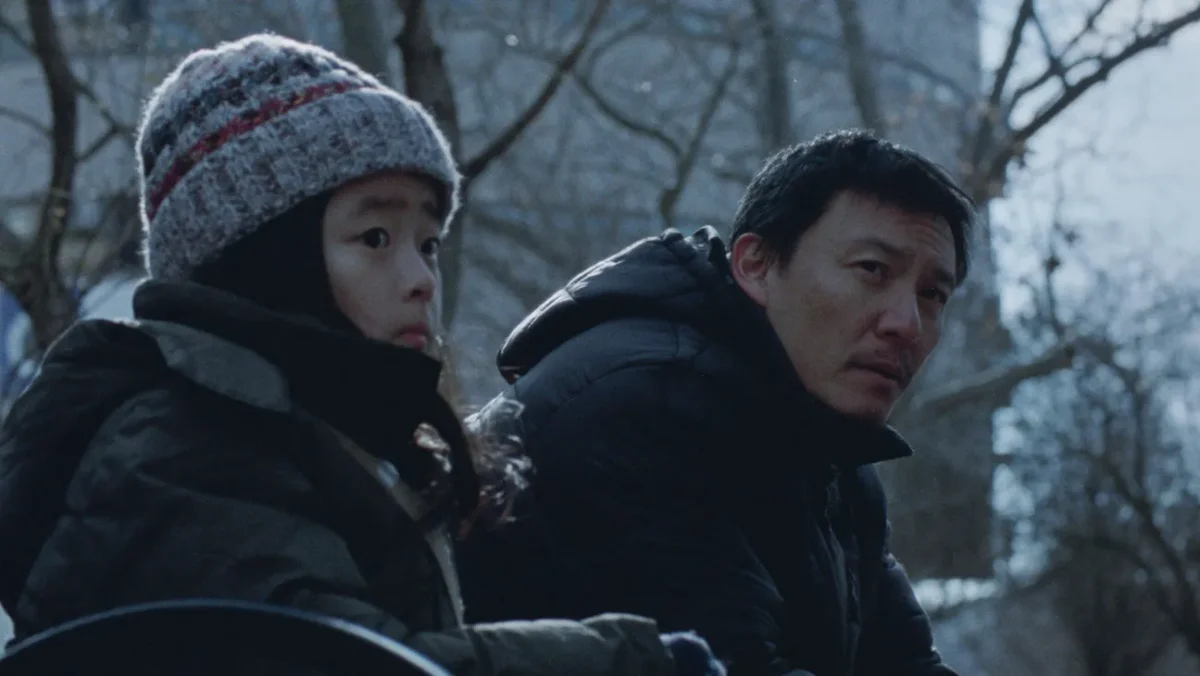
Furthermore, Choi wished to avoid the stereotype of “…the healthy immigrant…(if) the product of the toxic idea of the American dream.” The characterization is expertly balanced and – again – realistic. We feel that the trials and tribulations weigh heavily on Lou; We watch him indulge in petty crimes, we see him threaten people, we see his anger and shame. On the other hand, Lou is also a good and honest man who is simply trying to pay his rent and feed his family. He smiles and says he’s “not hungry,” which is a white lie to prioritize their well-being over his own. Lou – like all of us – is capable of all things: good and evil. Using this approach, there is tangible solidarity between us and him. We feel that Lou is a person and not a pagan or a hero.
No one learns about this duality more throughout the film than his daughter, whom Lou can do little to prevent from seeing all sides of his personality. As he scrambles to pick up the pieces and collect more money – when things are about to fall apart – cell phone distractions and lies about needing to run to “warm up” (when in reality they are in pursuit of someone who owes Lu money) don’t do the trick. Yaya sees all the aforementioned “good and evil” that her father is capable of. In less than a day, she witnessed how damaging the illusion of strength in the face of hardship can be—what life had done to one of her primary caregivers, the man who left home to give her a better future.
Throughout “Lucky Lu,” there is also an unforgiving feeling of isolation from society, of not feeling like anyone has a helping hand to offer. The result is that the film’s most poignant moments happen when they happen, even though they are rare. I go back to Ross’s story from “Last Week” segment. There is this amazing parallel feeling of horrific reality when Lou gets into a physical fight and is accidentally hit by a car. He limps away from the accident, greeting his daughter with a forced sense of normalcy. Later, we are shown an act of kindness from the same man he quarreled with. This moment serves as a gentle reminder that we are capable of such compassion. We can design a fairer system, based on helping each other when we fail.
If the American Dream is real, then so are the nightmares, and no perfect savior will come to awaken these workers. It would be more emotionally devastating if the same events in “Lucky Lu” happened to the most beautiful man on Earth, sure, but that’s not an image that exists in the world we live in. It resonates because it happens to an ordinary, flawed individual. Choi strikes this balance gently: suffering and love go hand in hand, and in the final scene of this special film – a bittersweet embrace between father and daughter – we see this fully depicted.
Read more: American Dream Guns: How Zack Krieger’s Guns (2025) Reflect Today’s Reality
Lucky Lu (2025) movie links: IMDb, Rotten Tomatoes, Wikipedia, Letterboxd
Kafi Starring: Chang Chen, Cecil Manna Wei, Perry Young, Luck of Fu, Fiona Fu, Fadi Rizk, Fadi Rizk.
Lucky Lu (2025) Running time: 1 hour and 43 minutes Film type: Drama